
From research to real leadership practice.
Where 5R began
The 5R Leadership Development Programme was developed at The University of Queensland (UQ) and is informed by more than two decades of research led by Professor Alex Haslam AM and colleagues in the Social Identity and Groups Network (SIGN).
This body of work transformed how leadership is understood. Rather than seeing leadership as a set of individual traits or skills, the research shows that leadership is fundamentally a group process, grounded in a leader’s ability to create, advance, represent and embed a shared social identity (a sense of “us” and “we”).
5R was designed to translate this science into a structured, practical intervention that leaders can use with their teams.
Research foundations
Social Identity Theory
Self-Categorisation Theory
The Social Identity Approach to Leadership
Identity Leadership (CARE model)
Research across psychology, organisational science, economics, and political science has consistently shown that leadership is most effective when leaders work with their groups to shape a shared identity.
Rather than asking “Who is the leader?”, this work asks:
Who are we?
What do we stand for?
How do we act together?
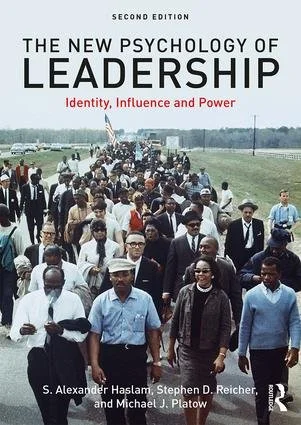
These ideas were brought together in The New Psychology of Leadership, an award-winning body of work that demonstrated how leaders gain influence by creating, representing, advancing, and embedding a shared sense of group identity.
This research has been applied and tested across diverse contexts, including business, healthcare, education, government, emergency services, and elite sport.
Leadership as a group process
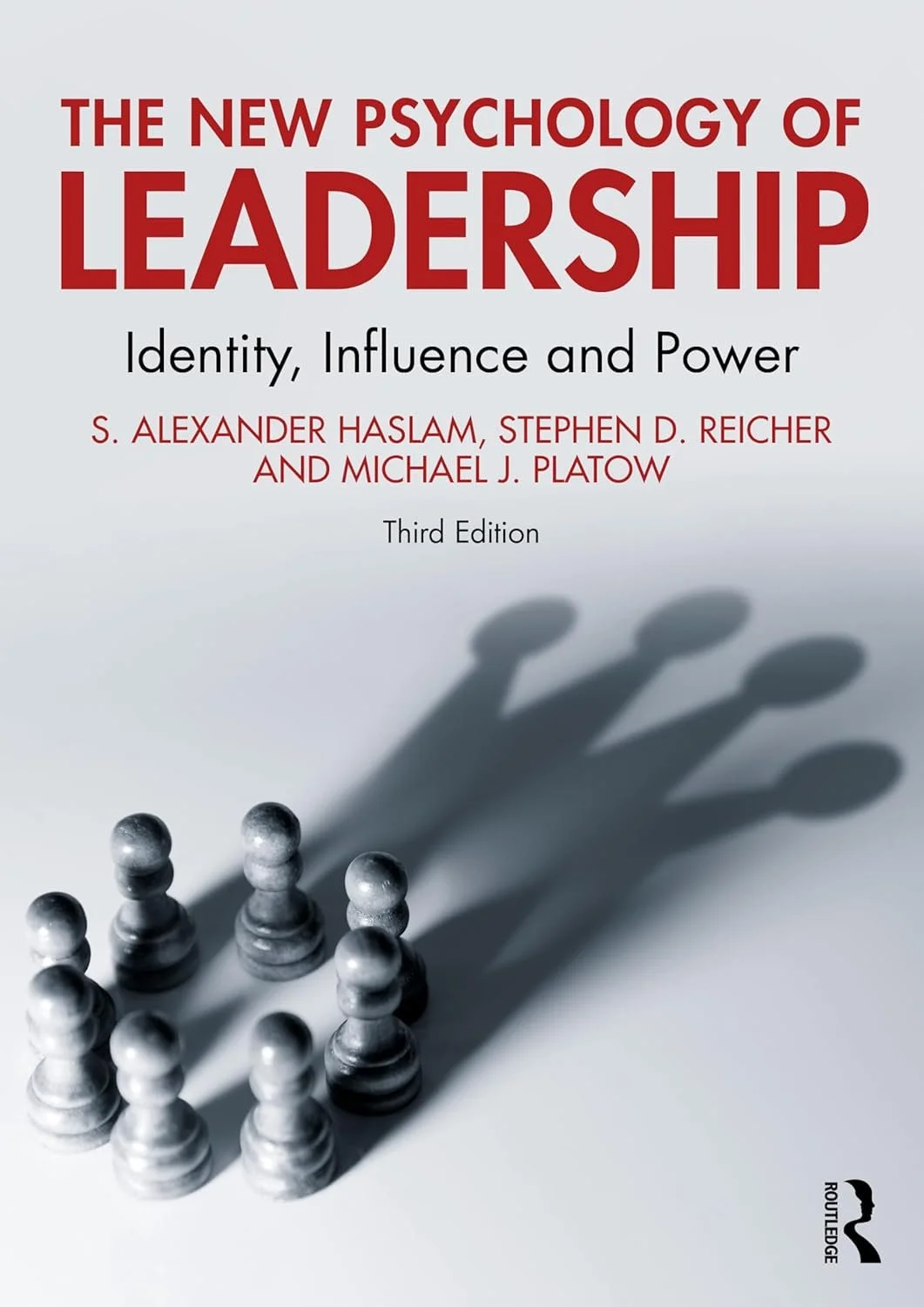
The New Psychology of Leadership is published by Routledge.
From theory to evidence: identity leadership in action
As interest in identity leadership grew, researchers turned their attention to a critical question: how can identity leadership be reliably observed, measured, and developed?
This led to Associate Professor Nik Steffens and colleagues developing the Identity Leadership Inventory (ILI), a psychometrically validated tool that captures four core dimensions of identity leadership, known as the CARE model:
Creating “us” (Identity Entrepreneurship)
Advancing “us” (Identity Advancement)
Representing “us” (Identity Prototypicality)
Embedding “us” (Identity Impresarioship)
Through work led by Professor Rolf van Dick at the Global Identity Leadership Development (GILD) project, the ILI has since been validated across industries, cultures, and leadership levels, and has been shown to predict outcomes including engagement, trust, wellbeing, and performance.
Why 5R was designed
Despite the strength of this evidence base, many organisations struggled to translate identity leadership research into everyday leadership practice.
Leaders often encountered leadership development programmes that were:


Detached from the teams they’re trying to lead

Little or flaky evidence supporting their claims

Increases leader hubris rather than collective outcomes
5R was designed as a direct response to these challenges.
Rather than removing leaders from their context, 5R supports leaders to work directly with their teams, using structured, identity-based activities that translate research into practice. The programme is deliberately designed to balance:


Scientific rigour

Practical relevance


Flexibility across organisational contexts
Testing 5R in complex systems
Since its initial development, 5R has been refined and tested through multiple industry trials in complex, high-stakes environments.
More than 250 leaders have participated in 5R programmes across industries including:
Government and public sector organisations
Infrastructure and utilities
Healthcare and emergency services
Education and higher education
International parliamentary and regulatory settings
Across these contexts, 5R has been shown to strengthen identity leadership capability, improve alignment and engagement, and support leaders to navigate complexity and change more effectively.

From university research to industry practice
The University of Queensland (UQ) is the copyright owner of the 5R Leadership Development Programme.
Following extensive industry trials, UQ’s commercialisation company, UniQuest, granted Synact (Identify Leadership Pty Ltd) a worldwide exclusive licence in 2022 to deliver the 5R programme under strict quality assurance and fidelity requirements. This ensures that 5R continues to be delivered in line with its research foundations and evidence base.
Synact was founded by Dr Blake McMillan, co-creator of the 5R Leadership Development Programme and former University of Queensland PhD researcher, who has been involved in 5R since its original design and development. His work has focused on translating leading academic research into practical tools and interventions for organisations operating in complex, high-stakes environments.
Synact was established specifically to scale the impact of identity leadership research by delivering high-quality, evidence-based leadership development in practice, while maintaining strong links to the academic community that developed 5R.
Under the licensing agreement, Synact makes royalty payments to UniQuest from each 5R programme delivery. These royalties are distributed to The University of Queensland and contributory authors in accordance with the University’s intellectual property policy.
Licensing and governance
UQ retains ownership of the 5R intellectual property
Synact holds the exclusive global delivery licence
Royalty payments are made to UniQuest
Funds are distributed in accordance with UQ IP policy